Why Finishing My Degree Became More Important After Having My Baby
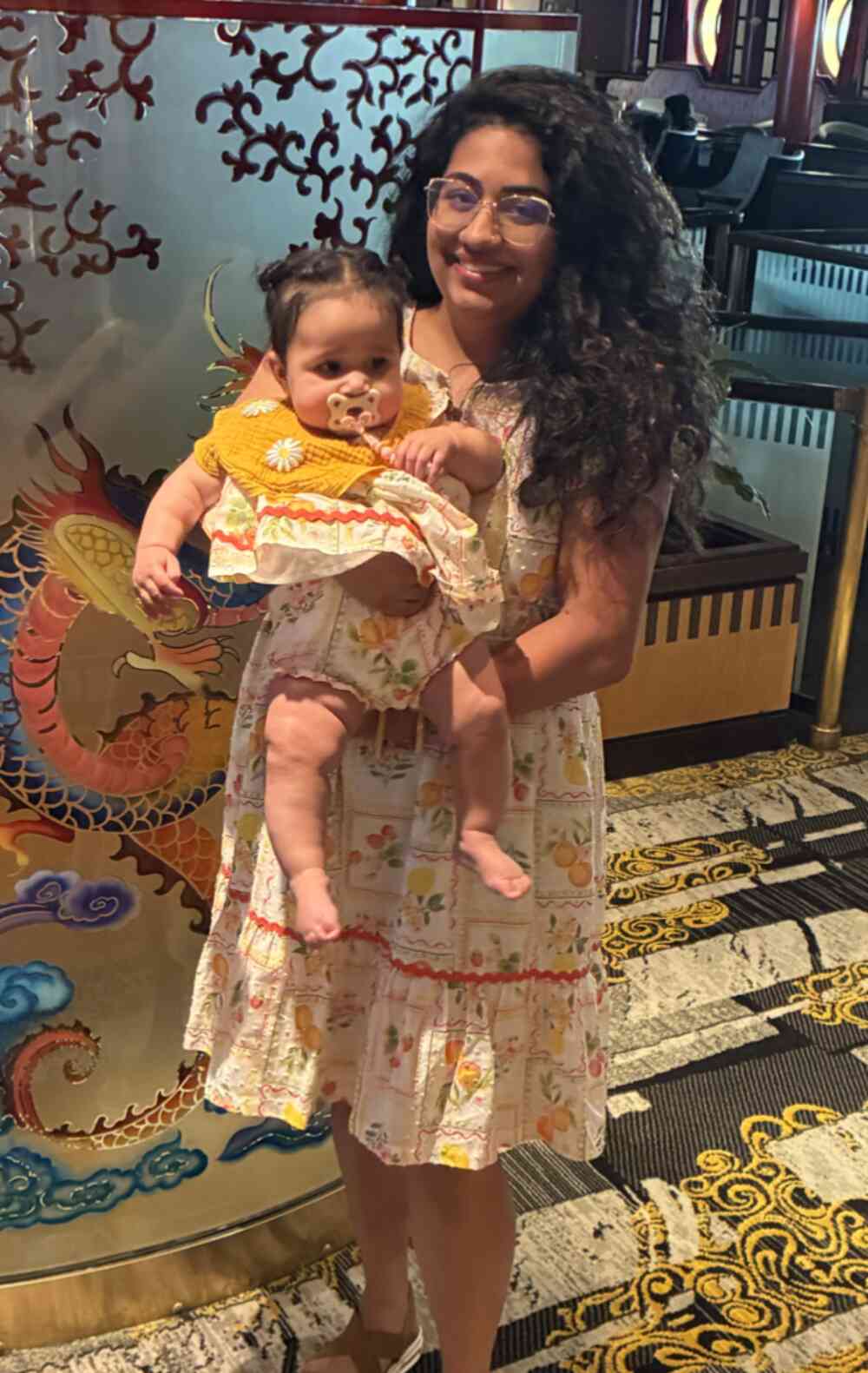
I instinctively rubbed my growing belly, my daughter’s little feet kicking in response to my touch as I sat in a chair that was far too uncomfortable for a 32-week-pregnant woman. Across from me, my program directors offered empathetic smiles as they gently urged me to reconsider my decision to stay in the Master of Social Work program.
“Why don’t you take the year off and come back when you’re ready?”
The problem was that I was ready.
I understood where they were coming from. I was about to become a first-time mother. My life was about to change in ways I could only imagine. The recommendation to take a year off was rooted in genuine concern with no malicious intent.
But what has stuck with me is the weight of that moment: how the conversation focused on whether I should leave rather than how I could be supported to stay.
I already wrestled with the decision to go back to school from the moment I saw the lines pop up on the pregnancy test. After careful consideration, I made a plan. I enrolled in all the summer classes I could take. I secured my first-year practicum site within three weeks of receiving my acceptance letter. I navigated the fatigue of pregnancy amid long classes, mounting assignments, and the chaos of the outdoor parking deck in the Georgia summer heat. While I knew there would be challenges, I didn’t see pregnancy or postpartum recovery as reasons to abandon my educational goals. Yet, it felt like justification was required to continue my education.
Many student parents encounter this reality. Pregnancy and postpartum recovery are especially viewed as interruptions to academic life rather than life events that institutions should be better prepared to support. This framing conveys an unintentional and potentially harmful message: pause your goals and come back when your life is less complicated and easier for us to handle.
As student parents, we know the truth: there is no easier time.
My program assured me that they would work with me and accommodate my personal changes. I had requested virtual classes through the Office of Institutional Equity, but my request was denied because my program requires “face-to-face” instruction. I found out at the end of class, and the next morning, I went into labor at 38 weeks with more stress and confusion from the lack of a back-to-school plan and limited understanding of my options. I was told frequently by program administrators that they were working on a plan for my return while I was freshly postpartum, but nothing concrete came out of it. To my classmates’ surprise, I was back in the classroom three weeks later as mandated while I recovered from a second-degree tear and adjusted to breastfeeding.
There were moments when I felt overwhelmed. The postpartum period was one of the most physically, emotionally, and mentally demanding experiences of my life, even without the stress of figuring out how to return to school. My days blurred together through feedings, sleepless nights, and constant adjustments to my new identity. I questioned myself constantly and wondered whether everyone was right that it would have been better had I deferred.
What I needed in those moments was not pressure to choose between being a mother and being a student; I needed support. I needed people who understood my rights as a pregnant and parenting student. I needed flexibility. I needed resources. I needed reassurance that there was space for someone like me in higher education.
Instead, much of the burden fell on me to locate resources, advocate for accommodations, and navigate policies that were difficult to identify and understand. I’m not the only one who struggled navigating this situation: some 52 percent of student parents withdraw from academic programs citing time poverty, schedule conflicts, and lack of tailored guidance navigating university resources. Student parents don’t quietly disappear from academic programs because they lack the ability or proper motivation to succeed, but because navigating family and student dynamics feels unnecessarily difficult.
Student parents should not have to become experts in policy while adjusting to parenthood. They should not have to hunt for resources and discover support services through trial and error. And they should not feel invisible on campuses that often don’t formally recognize, document, and track their presence. If higher education institutions are serious about student success, student parents must be included in that conversation.
I learned what inclusion of student parents could look like during my first-year practicum at Kennesaw State University’s Children & Family Programs (CFP) under Dr. Allison Garefino. CFP centers the lived experiences of student parents through a peer-to-peer model, which recognizes that those who understand the context of these unique challenges are able to best support others, strengthen community, connect or create resources, and help shape a more family-friendly campus. CFP recognized my experience and gave me the opportunity to create a postpartum guide for other students like me. CFP was awarded the Georgia Department of Early Care and Learning (DECAL) Two-Generation (2Gen) Innovation Grant to advance the academic success of student parents and expand family-centered programming. Applying the Aspen Ascend 2Gen framework to improve outcomes for families through a whole-family approach has helped CFP support postsecondary education paths. One of our current goals is advocating for student parents to become a protected demographic so that they can receive immediate support. As the program’s Graduate Research Assistant, I am excited to continue contributing to these efforts.
My experiences during postpartum and at CFP made me realize that support can take many forms. If institutions were to dedicate pregnancy and parenting advisors who can help students understand their Title IX rights and available accommodations, pregnant and postpartum parents could make decisions with ease and transparency. Expanded hybrid and flex learning models would allow students to remain engaged while navigating familial responsibilities. A better system for identifying student parents is necessary so institutions can assess their needs and connect them with resources proactively, rather than waiting for these students to ask—or worse, leave. But most importantly, institutions must move beyond seeing pregnancy and parenthood as reasons to step away from education. The first step program directors can engage in to actively support their student-parents is asking, “What do you need to succeed?”
Student parents demonstrate resilience every day. Nationwide, our campuses should recognize the reality of student parents’ lives and better support them. When student parents are given the resources they need to thrive, they can enrich classrooms by providing unique perspectives, strengthen our communities through intergenerational motivation, and create better futures for their own families through educational and economic advancements. As student parents, our degrees can mean many things to us. A way to reconnect with ourselves. A testament to our resilience. An investment in our future and our family’s future. Whatever the reason, the outcome remains: when student parents are supported, their goals become attainable.
My hope is that the next pregnant student sitting across from a program director will not be asked whether she wants to leave. Instead, she will be asked how they can best support her to stay.
Esha Singh is a rising second-year Master of Social Work student at Kennesaw State University and works as a Graduate Research Assistant for KSU’s Children & Family Programs. While she is looking forward to pursuing a career in psychotherapy, she hopes to continue her passion for advocacy. When she is not busy with assignments, she can be found chasing after her tiny boss, Shivani, who keeps her on her toes.