Promoting Success: Student Parents at UC Santa Cruz
In this SPARK blog post, we highlight an initiative to support student parents at the University of California, Santa Cruz. Profiling a program does not imply endorsement by the SPARK Collaborative.
🍌🐌🌲 Slugations—warm greetings from a proud University of California, Santa Cruz (UCSC) alum! (For those unfamiliar, UCSC’s mascot is the banana slug, hence our unique salutation.) I’m excited to share reflections from my journey as a student parent and about the community that helped me thrive. I attended UCSC as a sociology major from Summer 2022 to Summer 2024, graduating with highest honors while raising four children. I am now pursuing a masters in higher education and student affairs at the University of San Francisco.
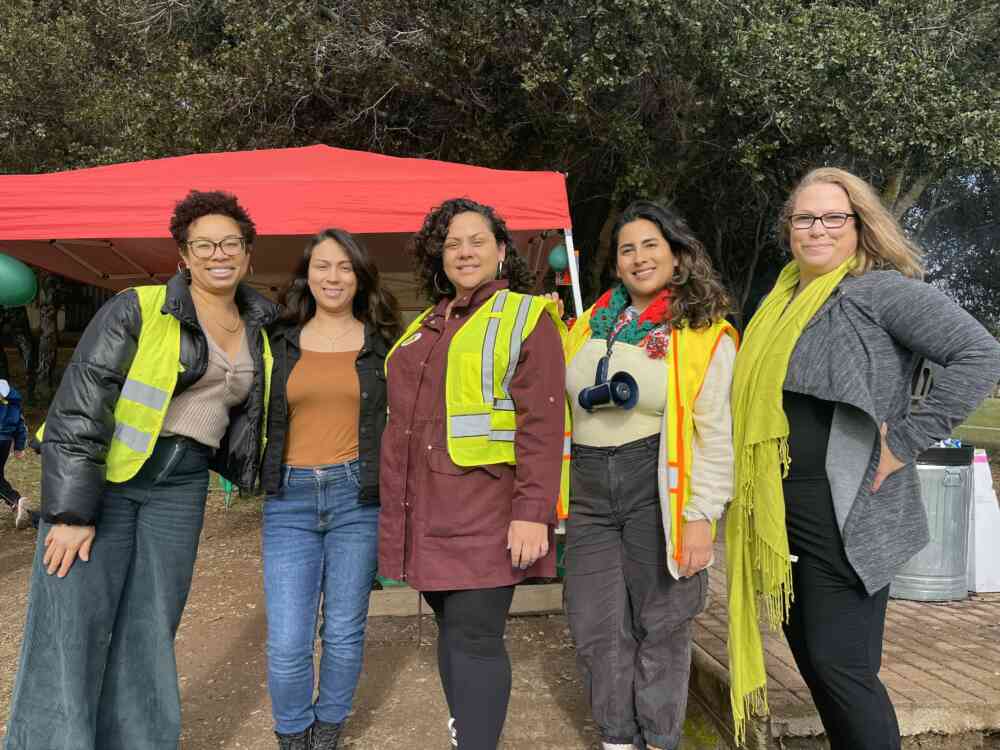
Recently, I had the opportunity to reflect on my experiences as a student parent at UCSC while speaking with Jannet Ceja, Program Coordinator with Services for Transfer, Reentry, and Resilient Scholars (STARRS). My conversations with Jannet, combined with my experiences as former president of the Student Parent Organization at UCSC, reveal both critical gaps and promising practices in support for student parents, particularly those from Black, Indigenous, and people of color (BIPOC) communities.
Finding Individual Support Lifelines
For many parenting students at UCSC, STARRS becomes the entry point into a network of care that helps families stay enrolled and supported. Despite systemic challenges, I found crucial support through STARRS and dedicated staff like Jannet, who manages priority enrollment, emergency financial help, specialized scholarships, wipes and diapers, and warm referrals to campus partners.
STARRS also maintains a student-created resource book that Jannet shares with every incoming student parent. As she explained, “Any new student parent that is incoming, we try to connect them with the student-parent resource book, which was initiated by incredible student parents who accumulated resources and put them together, because the university didn’t have something like that.” The crowdsourced, continuously updated book covers everything from child care options to financial aid contacts, both on and off campus.
Among the most important partners in this UCSC’s care ecosystem is Slug Support, the basic-needs and care team. Slug Support helps students navigate housing concerns, food access, emergency funding, and unexpected challenges. For student parents, Slug Support ensures families stay connected to resources when things feel uncertain. Together with STARRS, they cast a fuller safety net—though these services are opt-in, not automatic.
Jannet is candid about both the supports available and the systemic barriers that remain. STARRS recently moved locations on campus and is looking for a space for their diaper and wipes pantry. These are resources Jannet fought to add after students reported the campus’s basic-needs diaper program ran out too quickly. Also, funding remains precarious, and sometimes it disappears entirely. In fact, since I spoke with Jannet, child care support funding has been cut. Even as grant opportunities have become more limited and administrative flexibility has tightened, Jannet remains committed to advocating for the needs of caregiving learners. She continues to write grant proposals for emergency gift cards, travel support for student-parent programs, and child care subsidies.
While leaders like Jannet work hard to maintain critical support services, some of the most transformative changes come when student parents organize collectively.
Creating Change Through Community
Some of my most impactful moments at UCSC came from community-building and advocacy work. Through STARRS, I completed a for-credit internship leading the Student Parent Organization. When power outages hit family housing, our organization successfully advocated for our needs: UCSC provided mini generators and hotel accommodations without upfront cost, and secured $25,000 in emergency family student housing funds.
We also organized Bring Your Children to School Day, sponsored by the California Alliance for Student Parent Success, and advocated for allowing children to walk at graduation. This represented a powerful step toward visibility and belonging for student parents. UCSC is made up of 10 residential colleges, each with its own commencement ceremony. All 10 now have the choice to allow student parents to walk with their children — a change I share more about in a piece for The Hechinger Report.
Our advocacy also extended beyond UCSC. Building on the groundwork of previous Student Parent Organization leaders and the California Alliance for Student Parent Success, we contributed testimony and organizing that helped advance key bills supporting student parents, including Assembly Bill (AB) 2881, AB 2458 (the GAINS Act), and family-serving affordable student housing, which strengthen access to resources, child care, and institutional accountability. These bills expand priority registration for student parents, strengthen financial aid equity by accounting for child care costs, improve student-parent data, and open the door for future affordable housing projects that can better serve caregivers.
Facing Challenges
UCSC still faces real challenges with housing and child care, as many colleges do. There is only one child care center with limited hours, and family student housing has a waitlist over 100 families long. Jannet has begun sending students to local housing authority offices and emphasizing the importance of exploring off-campus options early. She sees housing as an area where students need more navigation: “I definitely think a caseworker that connects with the county, that connects with the state, besides a coordinator or resource person, that’s totally essential. I see the need. That would be so critical, so important, so necessary.”
For future Slugs with children, I always share the advice that family student housing is not guaranteed, and yes, the waitlist is real! Get familiar with your options early and explore off-campus possibilities in advance. Connect with STARRS as soon as you’re admitted—don’t wait until you’re overwhelmed.
Honoring Multigenerational Influence
Last year, my children walked me across the graduation stage and watched me receive the Herman Blake Award for community service at Oakes Commencement. They saw me advocate for policy change and witnessed me refuse to accept “that’s just how things are,” supported by a community that was rooting for us, including the student government, STARRS, alumni mentors, and administrators.
That moment has stayed with my children. One now dreams of studying abroad; another wants to attend UCSC. The question isn’t if college is possible—it’s where and when. They’ve internalized what they witnessed: higher education is for people like us. This is the multigenerational impact of supporting student parents—creating lasting change that extends far beyond individual graduation.
The combination of community, staff partnership, and targeted supports offers student parents tangible relief, connection, and a sense of stability as they navigate school, caregiving, and work that leads. Efforts by dedicated leaders like Jannet lead to amazing milestones like my family’s graduation day.
Connecting with the Community
If you’re a parenting student at UCSC looking for community or a place to begin, connect with
Student Parent Organization (SPO)
Email: ucscspo@gmail.com | Instagram: @ucsc_spo
Student Parent Resources (STARRS)
Email: starrs@ucsc.edu — Reach out to Jannet Ceja
If you’re interested in sharing your story, joining national conversations, or getting more involved in work to support parenting students, the SPARK Collaborative is a welcoming place to start. SPARK offers storytelling platforms, community circles, newsletters, and opportunities to connect with student parents across the country.
Wherever you are—in Santa Cruz or beyond—there is a community ready to support you.
Gratitude
Grateful appreciation to the entire community that makes student-parent success possible: Jannet Ceja and the STARS program, the Student Parent Organization, past and present, supportive UCSC administration who root for us, the Student Union Assembly, alumni mentors who pass down generational knowledge, and all the advocates who refuse to let families navigate higher education alone. Special thanks to the SPARK Collaborative for creating spaces where our stories and solutions can be shared across institutions and communities.