Promoting Success: A Conversation with Dr. Tina Cheuk on Student Parents at Cal Poly SLO
Dr. Tina Cheuk’s advocacy for student parents didn’t start with a strategic plan. It started with a lactation room that didn’t exist.
I spoke with Dr. Cheuk when the California Alliance for Student Parent Success hosted the California Student Parent Summit 2025. Dr. Cheuk embodies the theme of the summit—Innovate, Implement, Inspire—as the newest SPARK Collaborative constellation captain, leading community conversations with student-parent advocates. It’s a role that allows us all to benefit from her wisdom as a mother and associate professor with the California Polytechnic State University, San Luis Obispo (Cal Poly SLO) School of Education.
Cal Poly SLO is a “traditional” campus where most students don’t have children. But student parents attend. And Dr. Cheuk has spent years making sure the institution sees them.
From Personal Problem to Institutional Charge
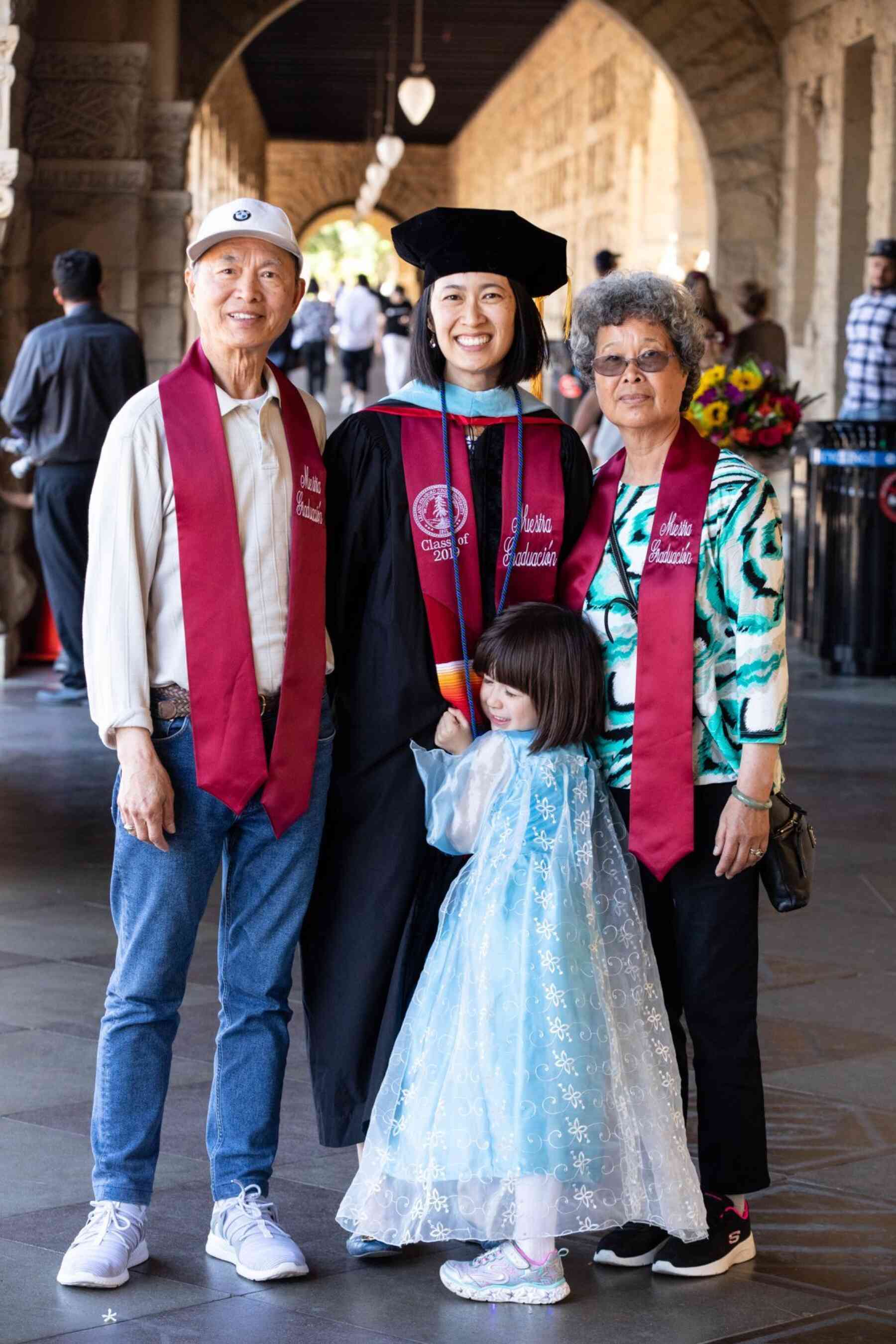
Dr. Cheuk was a student parent herself in graduate school over a decade ago. She started her doctoral program at Stanford with an infant daughter, still nursing. Previously an employee at Stanford, Dr. Cheuk saw her rights change when she transitioned to student status. She stated, “Employees have employee rights. Students are covered by Title IX. Different rights, different protections.” And the building where she worked? No lactation space.
“The solutions that were granted to me were inadequate,” Dr. Cheuk told me. “They asked me to schedule a conference room. They asked me to go across campus to a different building. A conference room isn’t a place to express milk.”
She reached out to 22 different administrators trying to solve the problem. Twenty-two. When that didn’t work, she researched her Title IX rights, connected with the Pregnant Scholar, and drafted a letter to the Office for Civil Rights. She sent it to her entire Graduate School of Education administration.
“Once I sent that draft letter, the dean was open to talking to me. Because otherwise it would be a federal case.”
That experience taught Dr. Cheuk something she carries into her work today: what looks like a personal problem is almost always an institutional one.
“I could not have been the only person who requested this accommodation. But in higher ed, this is called passing the buck. The institution creates the problem, and it’s up to me to solve it when it’s actually their responsibility.”
At Stanford, Dr. Cheuk founded Mothers in Academia, organized with other student parents, and eventually won a task force, a redesigned space, and policy changes. But it cost her time, energy, and resources she shouldn’t have had to spend.
“That’s when I knew being a student parent was inequitable in higher ed. Because higher ed wasn’t designed for parenting students.”
Change Won Through Advocacy
Dr. Cheuk brought that organizing experience to Cal Poly SLO when she joined the faculty. Her work at Cal Poly started when a parenting student found Dr. Cheuk through an op-ed she wrote for Inside Higher Ed. The student was being penalized for missing class to care for her sick child. Under campus policy, that was an unexcused absence. Being sick yourself? Excused. Athletic event? Excused. Student government? Excused. But your kid is sick, and you have to stay home? Unexcused.
“It took a lot of organizing on her part,” Dr. Cheuk said. “Signatures, working with student government, working with the Academic Senate.”
The result: a policy change. Now, if your child is sick and you can’t attend class, that’s an excused absence at Cal Poly SLO.
That win opened the door to more. Through years of advocacy, Cal Poly SLO now has a full-time staff member, Courtney Moore, dedicated to supporting students with dependents. There’s priority registration, community events, a newsletter, and an advisory board. The university joined the college cohort of the Data-to-Action Campaign for Parenting Students. These small things add up to something bigger: recognition that student parents exist on campus and deserve support.
Dr. Cheuk is clear about what made this possible: leadership. Having the president on board. Having folks at the cabinet level who are aware and supportive and not putting up barriers. And Dr. Cheuk uses her position strategically.
“I can say things that particular administrators or staff members can’t. I use my power as a faculty member to say uncomfortable things and move barriers out of the way. I’m tenured, so I can move and be outspoken in ways that other people cannot.”
Visibility, Community, and Connection
One of the hardest parts of supporting student parents is knowing who they are. At Cal Poly SLO, identification happens primarily through a systemwide application process in the Cal State universities. The application asks prospects to mark whether they have dependents. That data gets fed into enrollment systems, and Courtney follows up with outreach. The university also flags students who self-identify informally.
It took a law, AB 2881, to make identification of student parents happen across the California State University system. Dr. Cheuk uses that law to meet with senior administrators, asking, Are we providing priority registration? How are we capturing as many student parents as possible?
California’s Greater Accessibility, Information, Notice, and Support (GAINS) for Student Parents Act serves as more robust infrastructure at the system level to support student parents with financial aid and transparency. The GAINS Act is helping institutions better understand who student parents are by requiring that the true cost of attendance, including child care, is reflected in financial aid calculations. Cal Poly SLO now counts and publicizes how many students with dependents are on campus each year, partially thanks to their participation in the Data-to-Action Campaign.
“There’s no accountability measures to these laws, nor resources. But if there are people like myself and advocates in the space, we can use it to ensure parenting students are served by the system. We can call for officials to make sure they are doing what they need to do so that they can support their families.”
Cal Poly SLO has also formalized how student parents can walk the graduation stage with their children. The Students with Dependents Program invites graduating student parents to register through a form and receive logistical support for walking with their dependents. It’s a small but meaningful detail that signals student parents and their families belong—are visible and celebrated—at commencement.
The Remaining Work: Responsibility versus Flexibility
Dr. Cheuk is honest about what’s still missing. Child care is the biggest gap, especially for parents with children under 5.
“If you don't have child care and you want to go back to school, you can’t. Basically, you’re stuck in whatever position you are in or doing child care. You have to wait until they’re school-going age. So it’s this delay that's unnecessary.”
But the challenge isn’t just about infant and toddler care. Dr. Cheuk points out that a majority of student parents don’t need that kind of care. What they need is recognition.
Even parents with older children face child care gaps. School ends at 3:00 p.m. and someone has to pick the kids up. The hours between 3:00 and 5:00 p.m. present their own kind of child care crisis.
Beyond child care, Dr. Cheuk hears the same thing from student parents over and over: they need flexibility. Online options. Asynchronous classes. Hybrid modalities. Course schedules that acknowledge people have caretaking responsibilities with varying demands on their time.
“So I think if professors and systems understood that, I think giving more flexibility or creating broader pathways to degree completion for all the different demands... I think [that] would increase enrollment, increase graduation, increase workforce outcomes.”
Multigenerational Influence
Dr. Cheuk emphasizes that when institutions invest in student parents, they’re also investing in their families. The research is clear: the single biggest predictor of a child’s educational outcomes is their mother’s highest degree. And parents continuing their education is good for children.
“The more we invest in student mothers, the greater outcomes their children will have in education, in health, and in continuing their own education. And the converse is true. If we limit that, we limit the education of the next generation.”
When I asked Dr. Cheuk what she wishes more institutions understood, her answer was direct: student parents are already on your campuses.
“If they just did these few recommendations, some of it is low cost, some of it is higher cost, their outcomes would increase. Outcomes include higher enrollment, higher graduation rates, and a more diverse workforce.”
What’s Next
Dr. Cheuk’s ethos is one I carry with me:
“I want to work myself out of a job. I don’t want to be solving these problems forever, because the problems should already be solved.”
The goal is systemic change. Not fixing things for one student at a time, but building infrastructure that holds.
“Culture shifts take a long time. It takes people power. It takes resources. There’s always been people doing this work. They’ve been doing it in isolation. Now we organize. We need to continue to expand the umbrella, bring more friends and colleagues in, so that family-thriving campuses is a norm.”
That’s the work: not just meeting the minimum bar set by law, but pushing institutions to go beyond it. Using legislation like AB 2881 as a floor, and not a ceiling. Building critical mass until supporting student parents isn’t exceptional. It’s expected.
Connect with the Community
If you’re a student parent at Cal Poly SLO looking for support, connect with
Students with Dependents Program
Courtney Moore, Program Coordinator, studentswithdependents@calpoly.edu
If you’re interested in sharing your story or joining the broader movement, the SPARK Collaborative offers storytelling platforms, community circles, and opportunities to connect with student parents across the country. Wherever you are, at Cal Poly SLO or beyond, there is a community ready to support you.
Dr. Cheuk will soon be leading a SPARK Constellation, which is a space for student-parent advocates to connect, learn, and organize together. If her story resonated with you, this is your chance to be part of the conversation. Keep an eye on SPARK's channels for details on how to join.
Gratitude
Thank you to Dr. Cheuk for her time, her honesty, and her years of advocacy. Thank you to Courtney Moore and the Students with Dependents Program for holding space for families at Cal Poly SLO. Thank you to Maya Valree and The Alliance for bringing us together at the summit. And thank you to the student parents who refuse to accept “that’s just how things are” and organize for something better.
“This work is slow. It’s generational. And it’s happening because people keep showing up.”